Multiport robotic surgery (the usual approach)
Conventional robotic surgery is performed with the da Vinci Xi / X multiport (MP) platform: a camera is placed through one port, and three robotic instrument arms plus an assistant port are placed through four to five separate small skin incisions spread across the abdomen.
The da Vinci SP single-port system
The da Vinci SP single-port platform received FDA clearance for urologic use on 31 May 2018 (510(k) K173906) and packages a fully articulating 3D HD endoscope and three multi-jointed wristed EndoWrist SP instruments into a single 25 mm (2.5 cm) cannula, so that the entire operation can be performed through one small skin incision. In Dr Kooner's practice this is used for radical prostatectomy and selected kidney and reconstructive procedures as a pure single-site approach without additional assistant ports, consistent with the technique described in the pivotal Kaouk / Cleveland Clinic series.
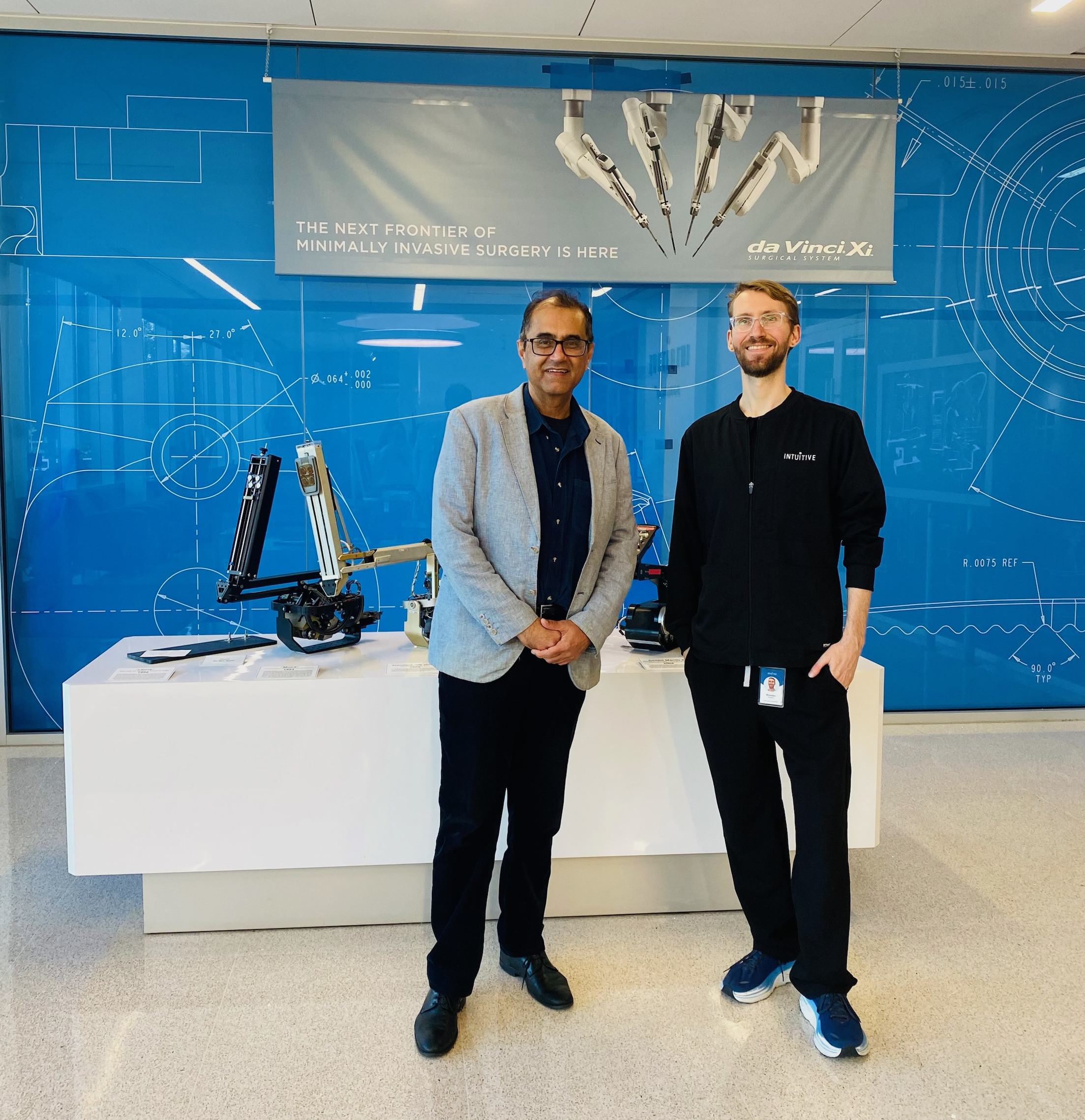
The operative principles are the same as for multiport robotic surgery: the same anatomical dissection, the same cancer-clearance and nerve-sparing steps, the same suturing. What changes is the access route to the pelvis or retroperitoneum.
How SP differs from multiport in practice
Two features of the SP system drive the differences seen in the published literature:
- Fewer skin incisions. One incision of approximately 3 to 3.5 cm replaces four to six. Less total skin trauma, fewer potential port-site complications, and a single-incision cosmetic result.
- Access outside the peritoneum. Because all instruments enter through one cannula, the SP system is well suited to an extraperitoneal (pre-peritoneal) approach for prostatectomy and a retroperitoneal approach for kidney surgery, working behind or in front of the abdominal cavity rather than through it. In comparative series this has been associated with less handling of bowel and a lower post-operative pain score on day 1.
In plain language: with multiport surgery the instruments usually pass through the belly (the peritoneal cavity) to reach the prostate or kidney. With the SP system, the instruments take a more direct route behind or in front of the belly cavity. In the published comparative series this has been associated with less post-operative pain and shorter hospital stays.
Evidence and meta-analyses Procedures offered
Peer-reviewed citations and PubMed IDs are listed in full on the Evidence page.